The 2023 Netflix anime Ooku (大奥) is based on the manga of the same name by Fumi Yoshinaga. It is set in an alternate version of the Edo period, where a plague that affects only men causes the male population to plummet. In this world, women become shoguns, and men gather in the Ooku of Edo Castle to serve the female shogun.
A shogun (将軍) was the head of Japan's highest-ranking warrior government, exercising effective governing authority based on military power. In actual history, the Ooku was the part of the castle where the shogun's wife, concubines, and female attendants lived. In other words, the story completely reverses the gender of the people who inhabited this private domain of the shogun.
So what was the real Ooku like? By following the historical records, we can look at how closely—or differently—it resembles the Ooku portrayed in the anime.
The Ooku in the Anime
Netflix describes the series as a story set in an alternate history where men have almost disappeared and qualified men serve within the castle as consorts to the female shogun. According to the original manga's description, 80 years after the plague first spread, the male population had fallen by 75 percent, and women had taken over every role, including that of shogun. The most beautiful men were also sent to the shogun's private chambers.
The story is told through a frame narrative. The eighth shogun, Yoshimune, wonders why women have taken men's names. She reads through records of the Ooku dating back to the time of the third shogun, Iemitsu, and the history of the Ooku unfolds through those records.
What Was the Real Ooku Like?
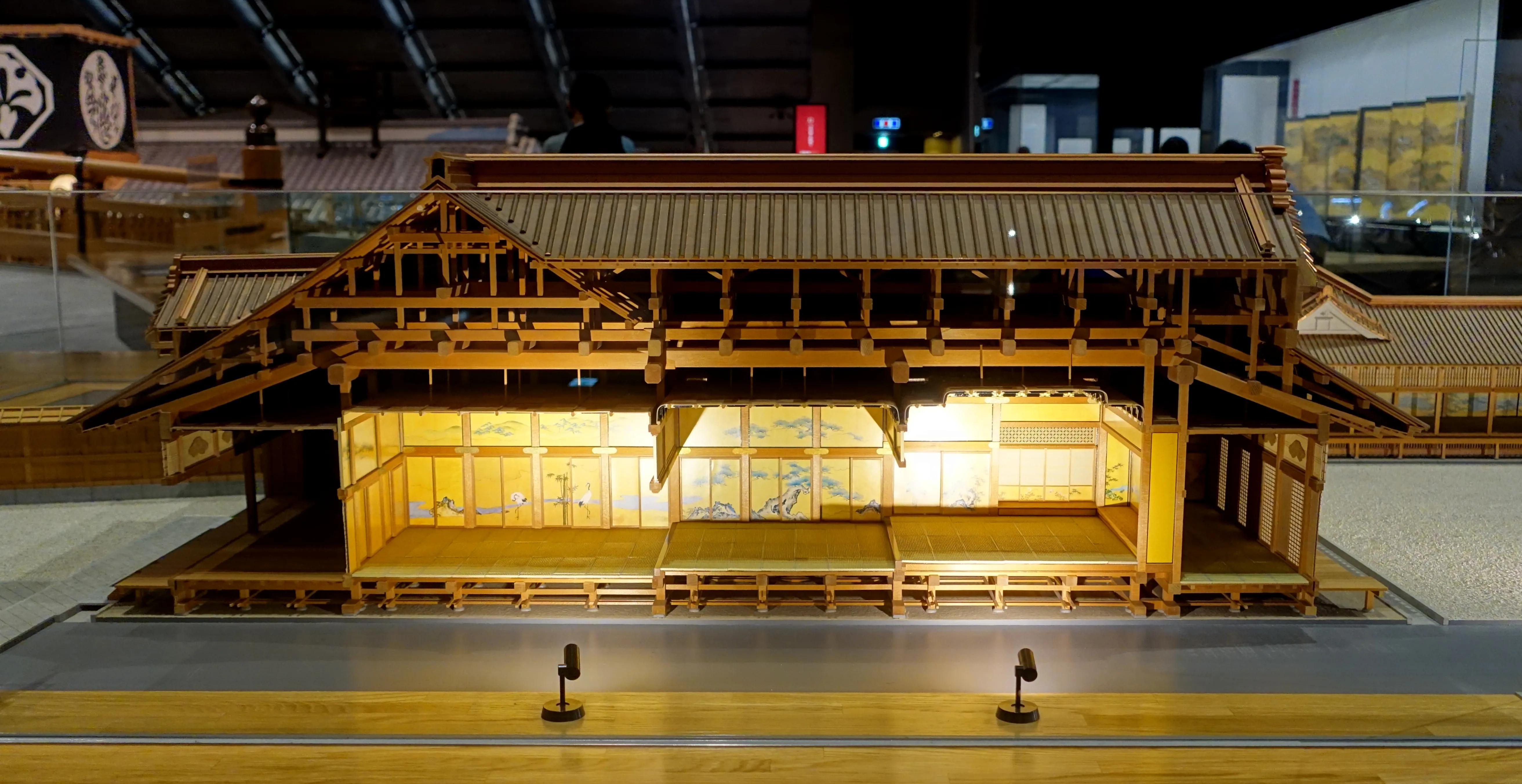
The real Ooku was located deep inside Edo Castle, which stood where the Imperial Palace is today, within the Honmaru Goten (本丸御殿). The Honmaru Goten was divided into three areas: the Omote (表), used for official shogunate ceremonies and affairs of state; the Nakaoku (中奥), where the shogun lived and conducted daily administration; and the Ooku, the private quarters of the shogun's family.
Although the Nakaoku and Ooku had separate routes of access, they were connected by a corridor called the Osuzuroka (御鈴廊下).
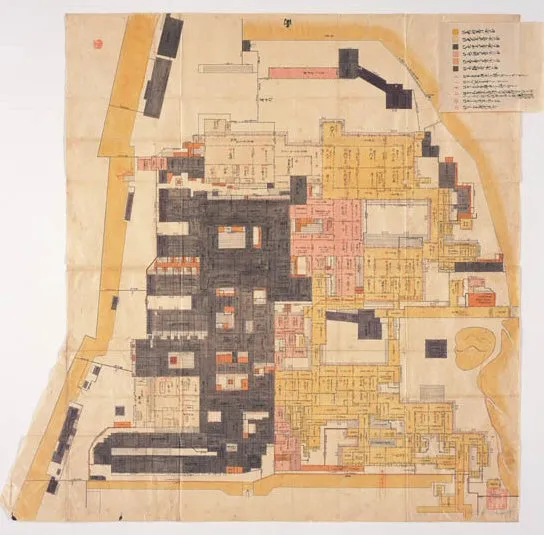
The Ooku itself was not a single room or building but was divided into several areas. An 18th-century layout of the Ooku in Edo Castle's Nishinomaru shows three main sections: the Gotenmuki (御殿向), the living quarters for the shogun's family; the Nagatsubonemuki (長局向), housing the female attendants known as Okujōchū (奥女中); and the Hiroshikimuki (広敷向), the administrative offices for male officials known as Hiroshiki (広敷).
In terms of scale, there were more than a hundred women directly attached to the shogun, while several dozen women served his principal wife, the Midaidokoro (御台所). Some accounts put the total number of people in the Ooku at around 1,000, while others give a figure of 3,000.
A Secret World
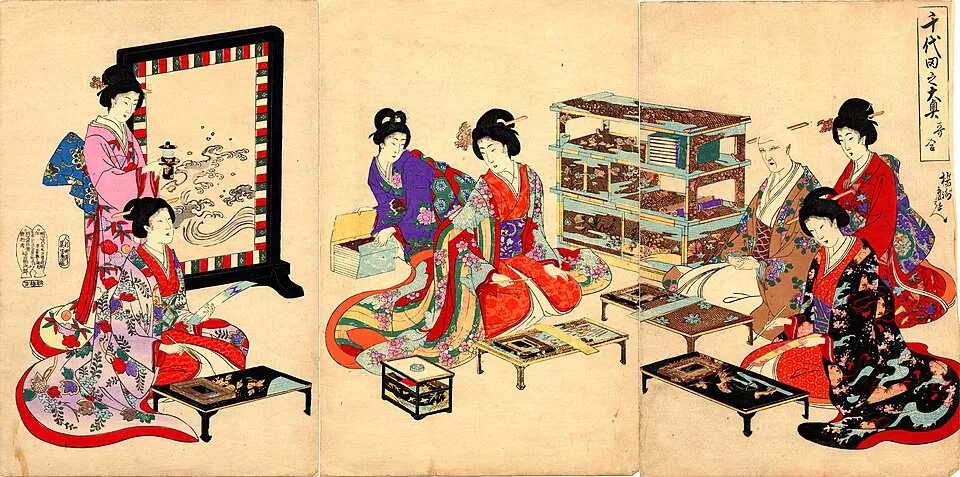
The strongest similarity between the anime and the historical Ooku is that both are portrayed as spaces hidden from the outside world. The Ooku was the private domain of the shogun's family, and ordinary people in the Edo period had no way to see inside.
The Ooku has long been a subject of novels, plays, and television dramas, and over time this has created a highly dramatic image of the place. When we think of the Ooku, it is easy to picture women in elaborate kimono and intrigues surrounding the shogun. This is partly because a great deal of imagination has been added to the historical Ooku through these later portrayals.
In reality, however, the Ooku was home not only to the shogun's principal wife and concubines but also to numerous women organized according to rank. Among them were Otoshiyori (御年寄), senior officials who wielded enough authority to oversee the operation of the Ooku as a whole. The Tokyo National Museum describes the Otoshiyori as officials responsible for the overall management of the Ooku, whose influence could at times rival even the central figures of the shogunate.
For this reason, viewing Ooku simply as a story about a female shogun and male concubines means missing a significant part of what makes the work interesting.
The secrets of the Ooku were also protected through institutional rules. The National Archives of Japan preserves a blood-seal oath submitted in 1864 by Matsumoto Ryōjun, who would later become the director-general of the military medical service. After being appointed an Okuishi (奥医師)—a physician who treated the women of the shogun's household—he pledged that he would consult with fellow doctors when prescribing medicine and follow the best treatment. He also swore that he would not reveal matters concerning the Ooku even to his parents, siblings, wife, or children.
The Otogibōzu (御伽坊主), who assisted the shogun in his private chambers, were likewise said to have kept the inner workings of the Ooku secret from outsiders even after they retired.
The People of the Ooku
Not everyone who worked in the Ooku was a woman. The Hiroshiki officials mentioned earlier were men who worked there to help operate the Ooku. The Okuishi were male physicians who treated the people of the Ooku, including the shogun, and examined the shogun's children born there.
The Otogibōzu, on the other hand, were women attached to the Ooku who enjoyed the rare privilege of entering the Nakaoku, the shogun's daily living quarters. The Jochūchō introduced by the National Archives contains records of women requesting retirement at the age of 70 and others described as having served for "more than 50 years," indicating that older women held these positions.
There was also a wide range of official positions. The hierarchy extended from the highest-ranking Jōrō Otoshiyori, to the aforementioned powerful Otoshiyori, the Ochūrō who attended to the shogun and his principal wife, the Omotezukai who handled communication with the outside, and the Ohashita who performed miscellaneous duties.
A Place for Securing an Heir
Another similarity between the anime and the historical Ooku is the question of succession. One of the Ooku's important functions was to raise the shogun's heir alongside his principal wife in order to ensure the continuation of the Tokugawa family.
In the historical Ooku, there were people whose specific duties involved childbirth and childcare. Records preserved by the National Archives include people responsible for acting as midwives, administering a newborn's first feeding, and nursing the shogun's young heirs.
One particularly interesting position was that of the Otogibōzu. These were older women who shaved their heads and dressed in a way that made them look like Buddhist monks. One of their main duties was to assist in ensuring the shogun had an heir. They arranged meetings between the shogun and his concubines. When the shogun was with a concubine in the Ooku's sleeping quarters, they would remain in the next room, observe what was happening, and then report back to the Otoshiyori.
Just as the anime Ooku portrays the shogun's private life as a matter of not merely personal affection but strict institutional protocol governing the entire Ooku, the historical process of producing an heir was also placed under a highly organized system of management.
Kasuga no Tsubone, regarded as one of the key figures in establishing the Ooku, was the wet nurse of the third shogun, Iemitsu, and worked to ensure that the direct Tokugawa line would continue to occupy the position of shogun. She also appears in the anime Ooku, at the center of the issue of Iemitsu's succession. Even though the genders have been reversed, the pressure to produce someone who could carry on the bloodline remains unchanged.
Another Stage for Politics
The appeal of the anime Ooku goes beyond simply reversing the genders of men and women. The series takes the hierarchy of a deeply secluded space that actually existed within Edo Castle, the system of succession, and the governing structure in which private life and political power were intertwined, while inverting a single fundamental axis: gender.
The historical Ooku, when examined through its records, was in the same vein a place that cannot be adequately described simply as the shogun's harem. With its strict hierarchy of positions, control over contact with the outside world, and management of succession, the Ooku was another stage for politics—where those closest to the shogun lived under an exceptionally rigorous system.
The depth of the alternate history constructed by the series ultimately comes from the historical weight of the real Ooku and the intricate system that once governed it.
References
- 江戸城大奥へようこそ 其の一 – Tokyo National Museum Blog
- Special Exhibition "Edo ☆ Ooku" – Tokyo National Museum
- Hatamoto Gokenin III: Various Occupations – National Archives of Japan
- Jochūchō 〈Otogibōzu〉 – National Archives of Japan
- Oku Oishi Seishi – National Archives of Japan
- Into the JAPAN WARAKU – Ooku Commentary
- Restoration of the Honmaru Goten of Edo Castle – Edo-Tokyo Museum
- Welcome to the House of Tokugawa – Edo-Tokyo Museum