When people think of the symbolic fruit in Call Me by Your Name, they usually think of the peach. But the film mentions another fruit besides the peach. It is the apricot.
Both peaches and apricots are representative summer fruits. With its abundant juice that seems ready to spill over, the peach represents Elio's unbearable desire in the latter part of the film. The apricot, however, has a different character.
You may remember that Elio's family often serves Oliver apricot juice. Oliver and Elio's father have a lighthearted discussion about the etymology of the word "apricot," and Elio is there with them. As Elio listens to Oliver for the first time, he begins to smile softly. I think this scene is the decisive moment when Elio becomes attracted to Oliver's intellectual charm. It is the point where an intellectual connection forms between them, going beyond mere physical curiosity.
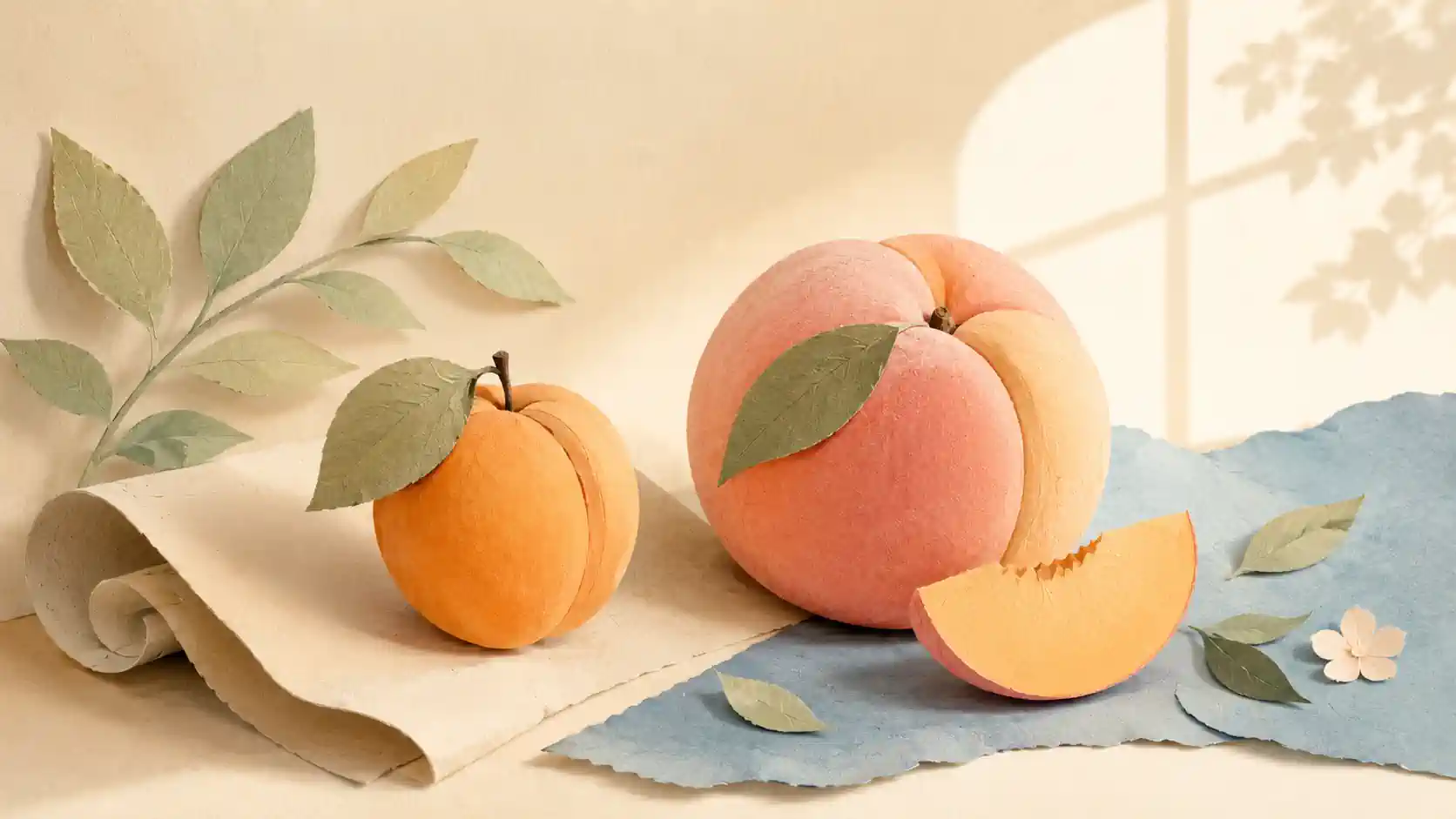
The Korean Etymology of "Apricot"
What if we applied the same process of intellectual play—tracing the etymology of the fruit that becomes a turning point in Elio's opening up to Oliver in Call Me by Your Name—to Korean?
According to the National Institute of Korean Language, salgu (살구) appears in 15th-century texts, including the Hunminjeongeum Haerye, in the form salgo (살고), and is a native Korean word. In Chinese characters, it is written as 杏, meaning "apricot."
However, among the general public, apricots have also sometimes been explained through a Sino-Korean interpretation. For generations, a folk etymology has circulated that interprets salgu as 殺狗 (salgu), literally "a fruit that kills dogs." This belief arose from the folk notion that the toxin amygdalin in apricot kernels could be fatal to dogs if they ate them, or that a dog tied beneath an apricot tree would die.
Although this is not the established etymology, apricots have at times been misunderstood in Korea through this rather sinister Chinese-character interpretation.
Apricots and Color
Apricots also have an interesting history as a color name. This brings us to "Flesh" as a color—something similar happened in both Korea and the United States.
In Korea, there was once a color commonly referred to as sal-saek (살색), literally "skin color." It was a color intended to represent human flesh, or skin. This color was widely used for crayons and for the color of stockings worn by women.
Although the term referred to the skin color of East Asians, criticism arose that defining skin color as a single shade was racially discriminatory. It was therefore renamed yeonju-hwang (연주황), meaning "light orange." However, because yeonju-hwang was not an intuitive term for children to use, it was changed to the simpler Korean name salgu-saek (살구색), meaning "apricot color," and has been in use since 2005.
Interestingly, the first syllable of the Korean word for "apricot," sal-gu (살구), is sal (살), which is pronounced and written exactly the same as the Korean word sal meaning "flesh." Moreover, considering that the color of a ripe apricot actually resembles the skin color that was previously called sal-saek, it is worth considering whether the name salgu itself might have originated from sal.
A similar thing happened at the American crayon company Crayola. The color "Flesh," which had been based on the skin color of a particular race, was changed to "Peach" as part of a broader social shift in terminology.
Differences in Changing Skin-Color Names
When changing the name for skin color, Korea and the United States chose different fruits: apricot in Korea and peach in the United States.
First, Crayola could not use "Apricot" as a replacement for "Flesh" because it had already created and sold an independent color called "Apricot." Therefore, it chose "Peach," a color visually similar to "Flesh" that had not yet been used as a crayon name.
Another reason "Peach" could serve as a replacement for "Flesh" in the United States was that the reddish undertones of white skin matched the coloring of a peach.
In Korean culture, on the other hand, when people hear "peach color," they commonly think not of a light orange but of pink (for example, "peach-colored cheeks" or "peach pink"). Since the existing crayon "skin color" had a yellowish skin tone, it made more sense to replace it with salgu-saek ("apricot color"), a light orange, rather than boksunga-saek ("peach color"), which is perceived as pink.
| Color Name | Hex Code | R (Red) | G (Green) | B (Blue) |
|---|---|---|---|---|
| U.S. Apricot | #FDD5B1 | 253 | 213 | 177 |
| Korean Apricot Color | #FBCEB1 | 251 | 206 | 177 |
| U.S. Peach | #FFCBA4 | 255 | 203 | 164 |
Peaches and Taboos
Even so, few Koreans would consider peach and pink to be exactly the same color, or think of the fruit apricot as being the same color as human skin. Apricots are much yellower, while peaches have a much lighter and whiter quality than pink. When the terminology changed from "skin color" to "light orange" and then to "apricot color," was peach color not considered at all?
I think peach may have been excluded in part because its visual form and metaphor were too sensual for children's educational materials. In the global ecosystem of memes and emojis, the peach is the most representative symbol for sexually objectifying buttocks or the body.
The peach's distinctive round and voluptuous shape, its soft skin covered in fuzz, and the juice that spills out when you bite into it are all decidedly sensual. The sensual depiction of the peach in Call Me by Your Name is a prime example. Given a somewhat conservative cultural sensibility, naming a crayon—something children hold in their hands every day and rub across drawing paper—after a fruit carrying such a powerful physical metaphor likely caused an unconscious sense of discomfort.
Apricots, by contrast, carry a harmless and lyrical image in Korean culture, evoking nostalgia for one's hometown through their appearance in children's songs rather than sexual metaphors. In that sense, apricot was a much safer choice than peach as the name of a crayon color for children.
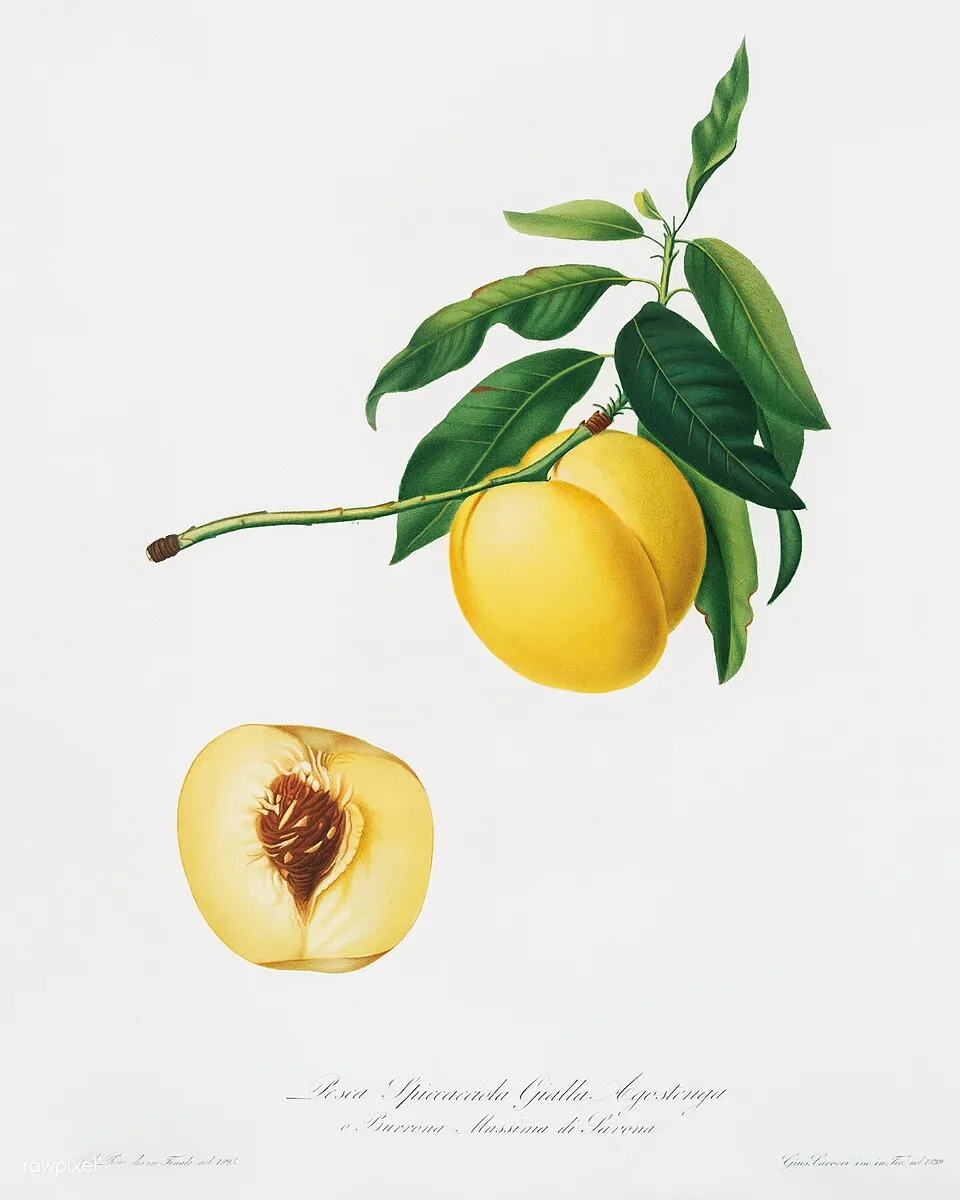 Rawpixel, CC BY-SA 4.0, via Wikimedia Commons
Between Reason and Desire — Two Fruits
In the face of the social norms of the older generation, Elio and Oliver hide their precarious feelings behind the intellectual etymology of the apricot—something safe and harmless.
Oliver says that the true root of "apricot" is the Latin "praecoquum," and adds that the Latin word means "early-ripening," or "precocious." This can be seen as representing Elio's precociousness, while also foreshadowing the passionate love and loss he is about to experience.
Within the film, the apricot symbolizes something intellectual yet restrained. Its firmness, which does not easily collapse in form, suits the rational conversations that take place at Elio's summer villa. Moreover, in the East, the apricot is synonymous with learning. The term Haengdan (杏壇, "apricot platform") originated from the tradition that Confucius taught his disciples beneath an apricot tree, and paintings of apricot orchards came to signify academic success.
The peach, on the other hand, is juicy and soft, easily bruised and distorted with even slight pressure. It resembles the sticky, primal desire that bursts out beyond one's control. The intuitive association between the peach's appearance and feminine curves or the body, and its use as a symbol of abundance and fertility, transcends Eastern and Western cultures alike.
True to its etymology, the apricot ripens earlier than other summer fruits in early summer, while peaches can be enjoyed in the middle of summer. Apricots and peaches tell us that Elio and Oliver's relationship was not simply eroticism, but a union of reason and instinct.
Perhaps this also mirrors the season of summer itself. Just as apricots ripen first and peaches follow, growing soft and lush, Elio's love begins with intellectual curiosity and deepens into desire. As summer ends, so too does their love. Their love—cautiously begun in early summer, ripened in the heat of midsummer, reaching its climax—will be remembered through these two fruits.