A Tourist's Guide to Love is the first Netflix film to be shot in Vietnam, taking viewers to beautiful destinations throughout the country, from Ho Chi Minh City to Hanoi.
When Amanda, the protagonist, first arrives in Vietnam, what awaits her is not a vacation but an extension of her work. She has been sent to secretly assess a local tour company her employer is planning to acquire, so Ben Thanh Market in Ho Chi Minh City is simply another stop on her itinerary.
Facing Her Limits
On top of that, Amanda has volunteered for the business trip to Vietnam following a sudden breakup with her former boyfriend, and her emotions are still unsettled. So when her guide, Sinh, urges her to bargain first when she wants to buy a scarf, she is still not ready to embrace the way things are done here.
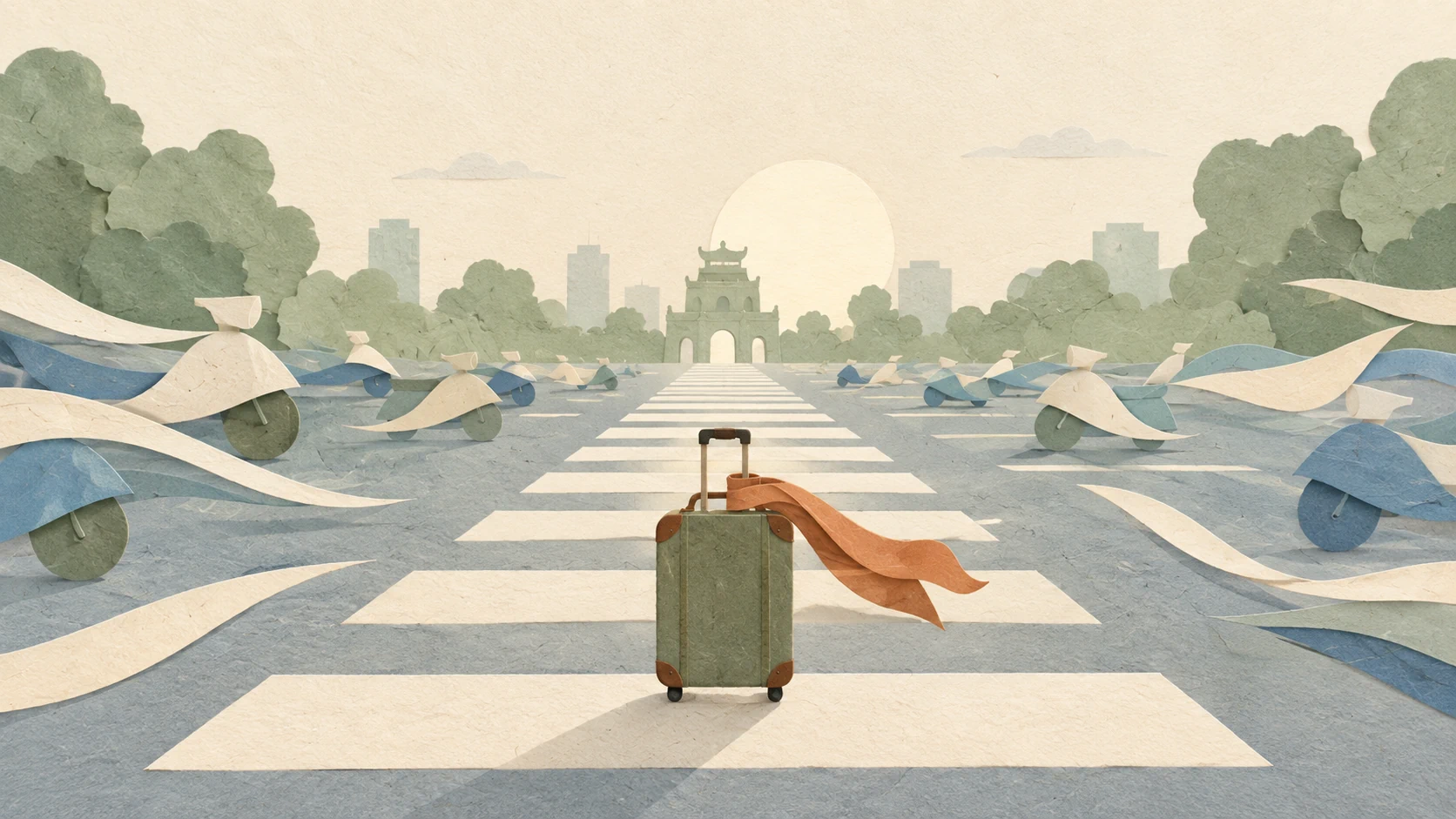
Falling behind the group, Amanda finds herself alone at the edge of the road as she leaves the market. Faced with an endless stream of motorbikes, she freezes, unable to find either a crosswalk or a gap in the traffic.
Sinh and the other members of the tour encourage her to be brave, but Amanda becomes convinced that she cannot make her way through the flow of traffic. She resigns herself to the idea that this is her limit.
In the end, she cannot bring herself to cross the street alone until Sinh comes over and holds out his hand.
How to Cross the Street in Vietnam
Sinh tells Amanda that the secret to crossing the street in Vietnam is simply to hold out your hand, keep moving forward slowly and steadily, and never step back.
This is not merely a cinematic exaggeration. An official travel information website operated by Vietnam's tourism authorities explains in its guidance for independent travelers that even the country's busiest cities can be navigated on your own once you learn how to cross the streets. The key, it says, is confidence and clear body language.
Travel writers who have lived in Vietnam for decades offer a little more detail. You should walk slowly but maintain a steady pace, and never suddenly change direction or stop in the middle of the road. Drivers are already accustomed to maneuvering around pedestrians, but unpredictable movements can make accidents more likely.
The principle is simple. The flow of motorbikes is not something that stops for you; instead, it responds by moving around you. When a pedestrian moves forward at a steady, unwavering pace, drivers can anticipate their path and naturally adjust their own course.
But the moment you hesitate or change direction, that predictability disappears. Safety comes not from speed, but from consistency. Stopping, stepping back, or changing your mind—in other words, every moment of hesitation—can become the most dangerous choice of all.
Life works much the same way.
On the road of life, we have no choice but to keep moving forward. What we can decide is which direction to take and how steadily we will move toward it.
Even after learning this lesson in the film, Amanda does not fully understand its meaning for some time. She watches Sinh's carefree way of moving through the world from the sidelines, yet her own journey still unfolds like another assignment.
It takes a little longer for her heart to find its direction.
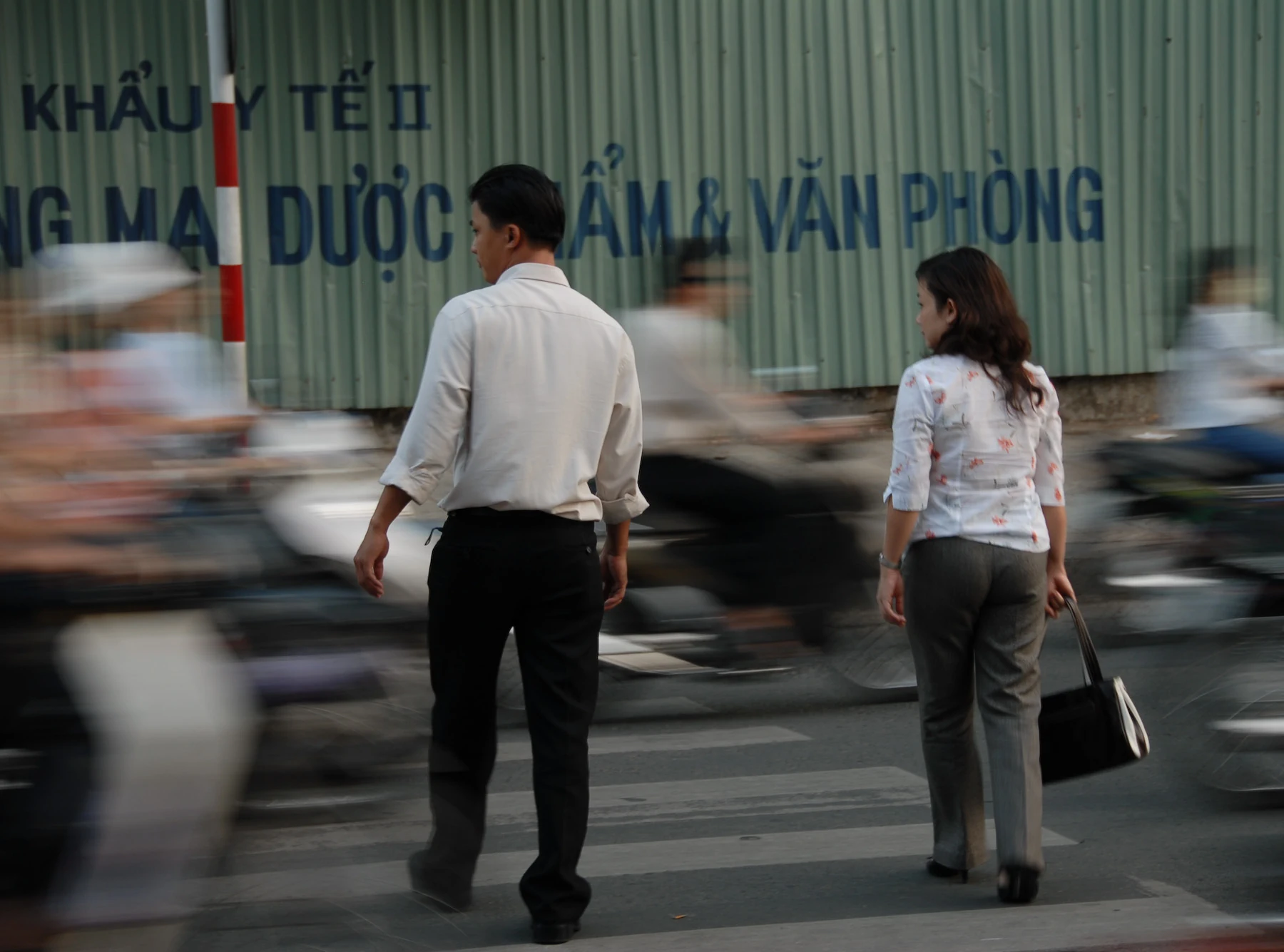 Source: Wikimedia Commons (Photo by Lucas Jans / CC BY-SA 2.0)
Moving Forward on Her Own
As Amanda continues her journey, she finally realizes that there is a place in life that belongs to her alone. What she truly wants is to live happily as her authentic self, rather than the person others expect her to be.
At the end of the film, Amanda finds herself once again at the roundabout in front of the Hanoi Opera House. She swallows hard as she looks out at the open expanse filled with an endless stream of motorbikes, with no traffic light in sight.
But that is all. She crosses the street without hesitation or turning back. Having finally broken through her self-imposed limits, she walks toward Sinh with steady, quiet confidence—entirely on her own terms.
The lesson in street-crossing that Sinh once taught her is no longer just a safety rule; it has become the defining metaphor for the choices she now makes in her own life.