Anatomy of a Fall centers on the death of a husband who fell from a window in a remote French village. As the courtroom battle digs into the cause of his fall, the family's private life is dissected piece by piece, lending the film a heavy, oppressive atmosphere throughout. The trial is set in the courthouse of Grenoble, France — and for someone accustomed to Anglo-American courtroom dramas, the French courtroom felt strikingly unfamiliar to me.
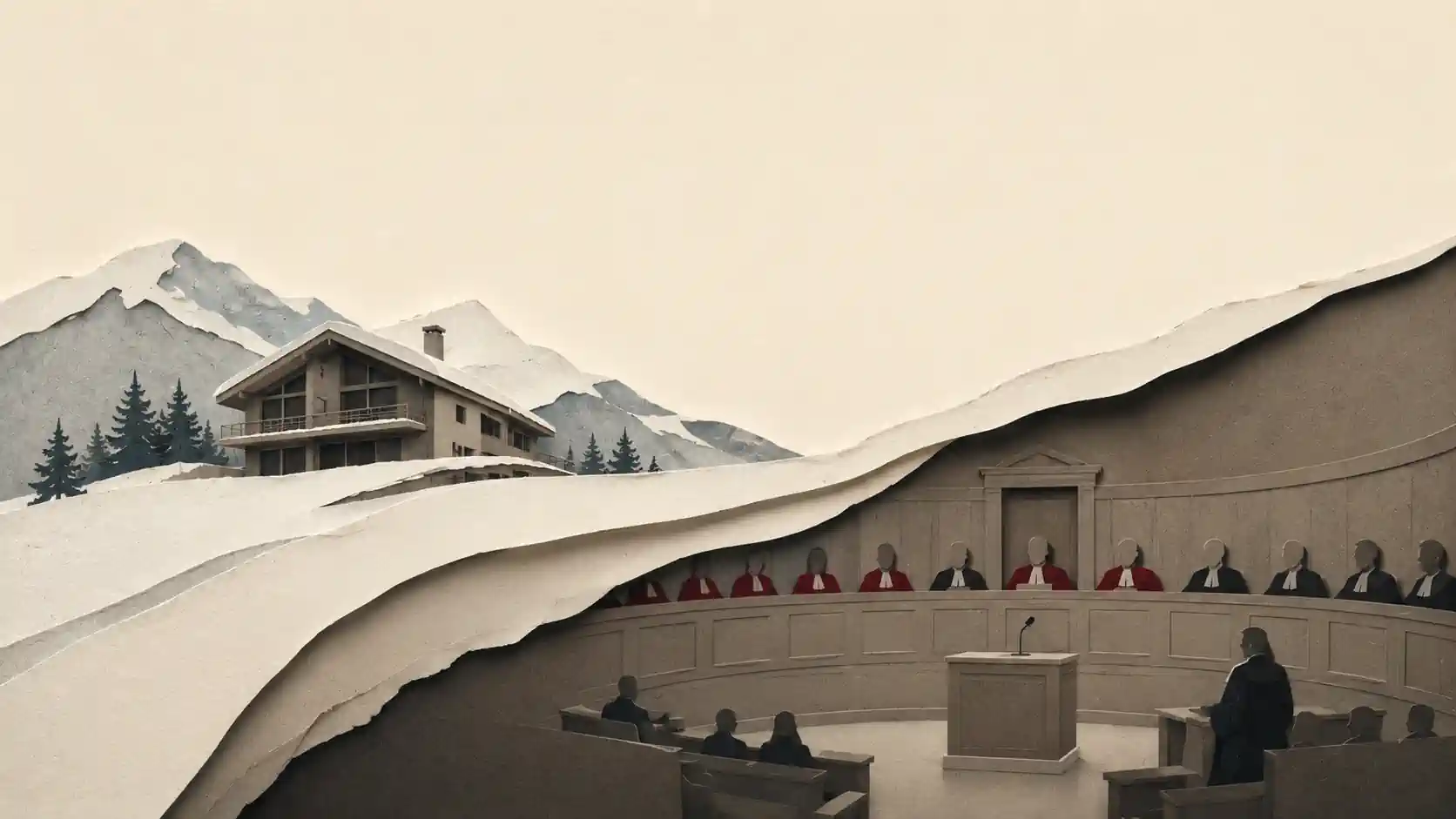
Color Contrast of Judicial Robes
One of the most striking visual elements in the courtroom scenes is the color contrast between the robes. The presiding judge and the prosecutor wear red robes, while the defense lawyer wears black. Both the red and black robes are paired with a white collar-like band called a rabat — a wide, pleated piece of white fabric worn by both judges and lawyers alike, whose pure white color symbolizes impartiality and neutrality.
Red vs. Black: Symbols of Power
Red robes are reserved for judges at the appellate level and above — specifically, presiding judges of the cour d'assises (the criminal court that hears the most serious cases) and prosecutors attached to the courts of appeal. Historically, red was the color of kings; it reflects the idea that the monarch was the ultimate source of justice, and that judges preside on delegated royal authority. In the film, the red robes worn by the judge and prosecutor symbolize the ruthlessness and authority of state power.
Black robes, by contrast, are worn by defense lawyers and judges of the first-instance courts, with black or red epaulettes marking further distinctions within the rank. This black tradition traces back to the long-standing dress codes of the church and the university, symbolizing "detachment from worldly desire" and "equality before the law." In the film, Vincent, the lawyer who stands by the defendant's side throughout, wears this black robe — standing as a visual counter to state power.
French Court Structure: Échevinage
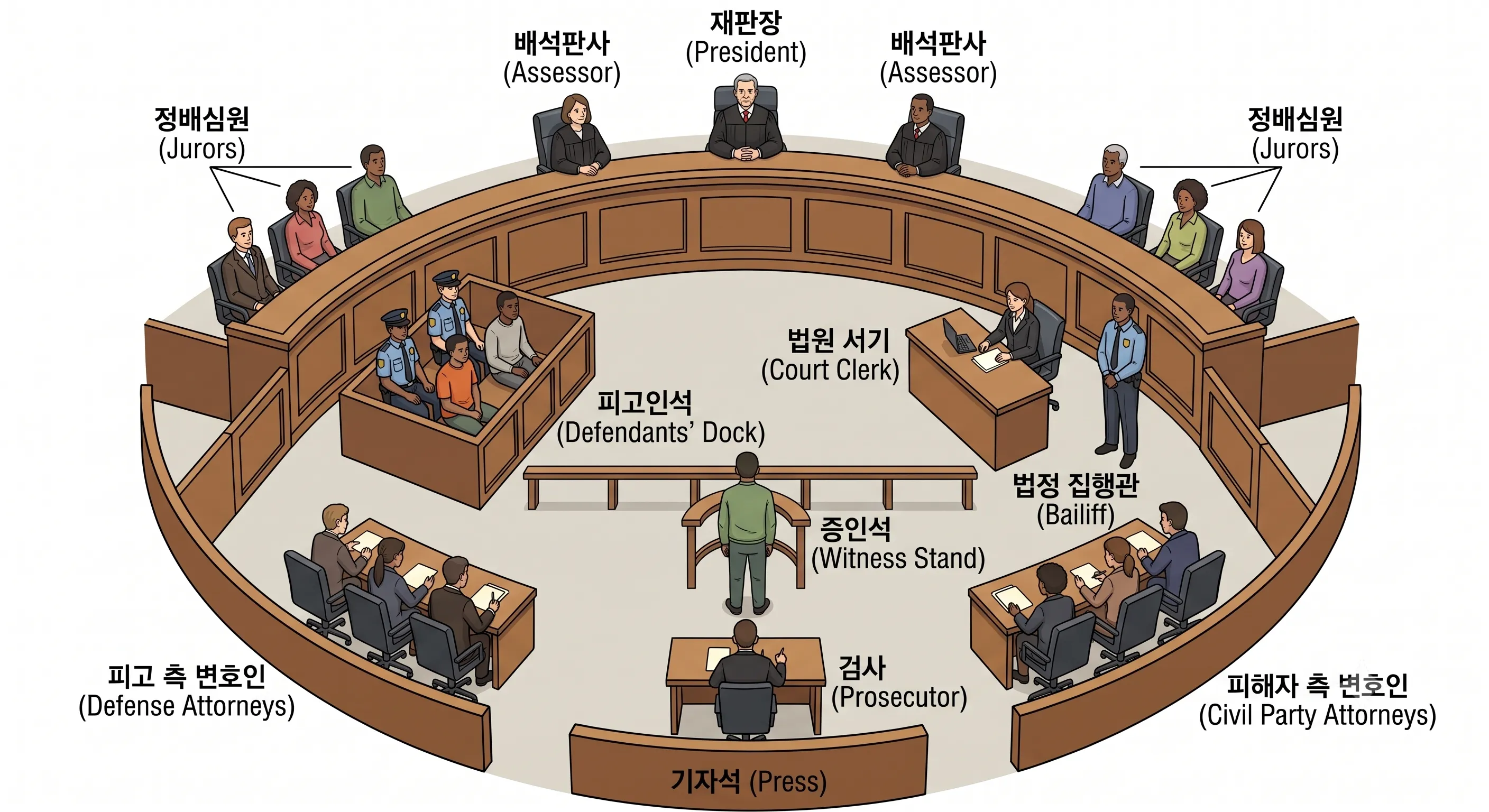 A brief seating layout of the French Cour d'assises
Another distinctive feature of the courtroom is its physical layout: the judges and jurors sit together, side by side, on a raised, semicircular platform. This structure originates from a uniquely French judicial tradition known as échevinage. It refers to a system in which professional judges (magistrats professionnels) and lay jurors, or échevins, sit on a single bench and reach verdicts together. The term traces back to the historical role of the échevin — a local municipal representative who once took part in trials.
In the film, the judges and jurors look down together at the witness stand from this elevated position as they conduct questioning. The defendant and defense counsel sit off to one side, while witnesses stand at the center of the semicircle to testify. It's a structure that feels both intimidating and deeply immersive. This differs sharply from what's typically shown in American films, where judges alone occupy the bench and jurors sit separately in a jury box — a contrast I found genuinely fascinating while watching the courtroom scenes.
Grenoble and the Isolated Outsider
Geographically, Grenoble sits deep in the French interior, yet borders both Switzerland and Italy. The protagonist, Sandra, is German; she met her French husband in London and later settled with him in France. Although Sandra spoke English with her family day to day, the court makes no such accommodation, and she's largely compelled to testify in French. Watching her — a foreigner being interrogated and picked apart within a conservative, insular city and an unfamiliar legal system — there's an eerie resonance between her situation and the character of the city itself.
Sandra is ultimately acquitted, but not before her private life is laid bare before her son and the public. In that sense, the "fall" in the title isn't only her husband Samuel's fall from the window — it's also another kind of fall: the one Sandra herself endures, forced to expose her imperfect language and the intimate details of her marriage, all in the name of determining the truth behind his death.