Netflix thriller Vanishing Point (original title: 消失的人) begins with three incidents unfolding in what appears to be an ordinary apartment complex, eventually converging through a single connection. The story starts with the search for a child who has suddenly disappeared, and part of the film's appeal lies in piecing together how this disappearance is connected to the different incidents hidden within the apartment complex.
Vanishing Point drew attention after reaching No. 1 in Netflix's movie category in South Korea, Taiwan, Hong Kong, Vietnam, and Thailand just four days after its release.

The film presents us with a paradox. The characters pass one another in the same building and along the same corridors, yet live without knowing much about each other's lives. Even when something happens, there are no witnesses, and the truth only emerges after a series of coincidences and belated investigations.
Yet in the country where the film was made, China, very little anonymity remains on the streets.
The Country Where the Most Cameras Are Watching
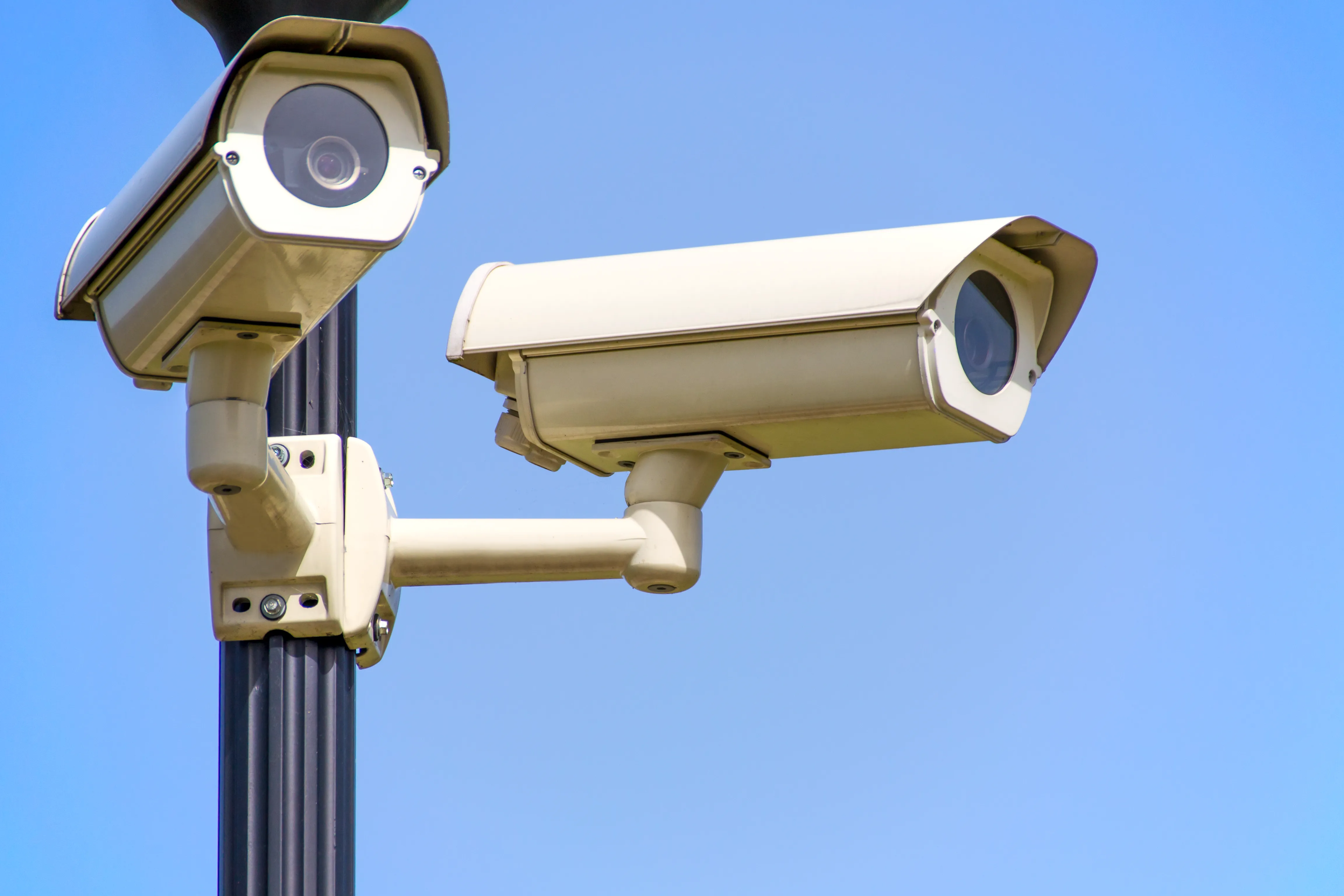
Since 2004, China has pursued a nationwide surveillance camera project known as Tianwang (天網, "Sky Net"). Initially built primarily in urban areas, the system was later extended into rural regions through the Sharp Eyes Project (雪亮工程).
The scale is difficult to imagine. China is known to have more than 20 million intelligent CCTV cameras installed across the country, while one analysis estimates that around 600 million cameras monitor a population of 1.4 billion.
These cameras do more than simply record footage. They are designed to identify individuals not only through facial recognition but also through physical characteristics such as clothing and gait.
Interestingly, one of the media outlets that has presented the power of this system in the greatest detail is none other than China Central Television (CCTV), the country's state broadcaster. In Amazing China (辉煌中国), a six-part documentary series aired in 2017, CCTV itself stated that "China has already built the world's largest video surveillance network."
Surveillance was not a secret. It was a government achievement openly promoted by the state.
The Net Actually Works
There are also cases that demonstrate the effectiveness of Tianwang. In 2018, a wanted man who had killed seven people and remained on the run for 20 years was eventually arrested despite having undergone plastic surgery to alter his appearance and using a forged identity card. The CCTV network, combining big data with facial recognition technology, provided a crucial lead.
Following the COVID-19 pandemic, surveillance became even more deeply embedded in everyday life. Facial recognition gates were installed at school entrances and government buildings, making identity verification a routine procedure. According to one report, students at a middle school in China's Yunnan Province were required to undergo both facial recognition and temperature checks every time they arrived at school.
Why the World of Vanishing Point Doesn't Quite Overlap
The apartment complex in Vanishing Point is portrayed as a place where things can happen without anyone noticing. For this setup to work as a convincing thriller, it requires the premise of surveillance blind spots. In a society where systems like Tianwang have become part of everyday life, an apartment corridor with no visible cameras is closer to a fictional device.
The film, however, makes this premise plausible by establishing that residents kept camera installations to a minimum to cut costs. Even within this gap, the police diligently review CCTV footage. The missing child's parents also watch the screens at the control center alongside the police, searching for clues.
What makes the film particularly interesting is the paradox it reveals: the more densely surveilled a society becomes, the more the actual indifference and disconnection between people cannot be filled by technology.
Cameras can track the traces left behind by an incident, but they cannot record the relationships between people or the hidden stories unfolding within the blind spots beyond the screen.
In Vanishing Point, it may not be just people that disappear. It may also be the attention we pay to our neighbors and the careful observation of what is happening around us.
References
- SBS, "'Has National Surveillance Begun?' — A Closer Look at the CCTV at Hongdae Station," Aug. 2026
- Asia Economy, "The Age of AI Facial Recognition — 'Big Brother' Concerns in Advanced Nations," Apr. 2024
- Korea Economic Daily, "1.4 Billion People Watched by 600 Million CCTVs — China Digitizing Even Walking Patterns," Jun. 2020