Released in 2009, director Mamoru Hosoda's animated film Summer Wars (サマーウォーズ) follows Kenji, a high school math prodigy who visits the hometown of his unrequited love, Natsuki, and unexpectedly finds himself joining her extended family in a battle against a superintelligent AI that has brought the world to a standstill.
Faced with an overwhelming enemy capable of sending a satellite crashing to Earth and wreaking havoc on administrative networks around the world, Natsuki's extended family reaches for its last weapon—not advanced hacking technology or a firewall, but an old deck of hanafuda cards.
Here's how this seemingly absurd showdown manages to make perfect sense to the audience.
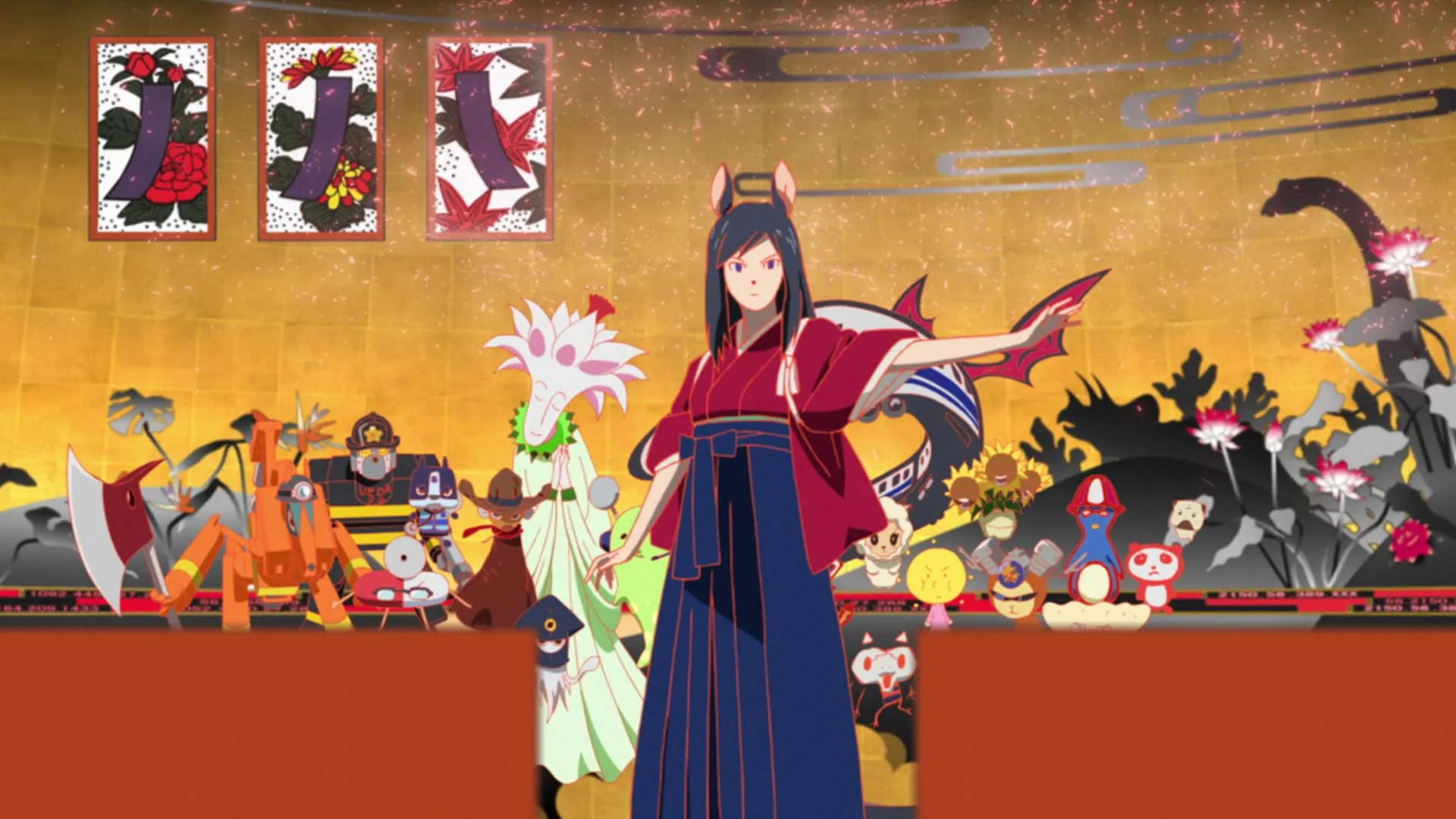 Studio Chizu official X (@studio_chizu)
What Is Hanafuda in Summer Wars?
Hanafuda (花札) is a traditional Japanese card game consisting of 48 cards. The deck is divided into 12 suits representing the 12 months of the year, each featuring a different flower or plant, with four types of cards in each suit: bright cards, animal cards (tane), ribbon cards (tanzaku), and plain cards (kasu).
The game Natsuki plays in the film is more precisely koi-koi (こいこい), one of the best-known ways to play hanafuda. Players match cards in their hands with cards on the table to complete designated combinations and compete for points.
One of the defining features of the game is that even after completing a winning combination, a player can choose not to end the round. Instead, they can call out "Koi-koi!" and continue playing in pursuit of an even higher score.
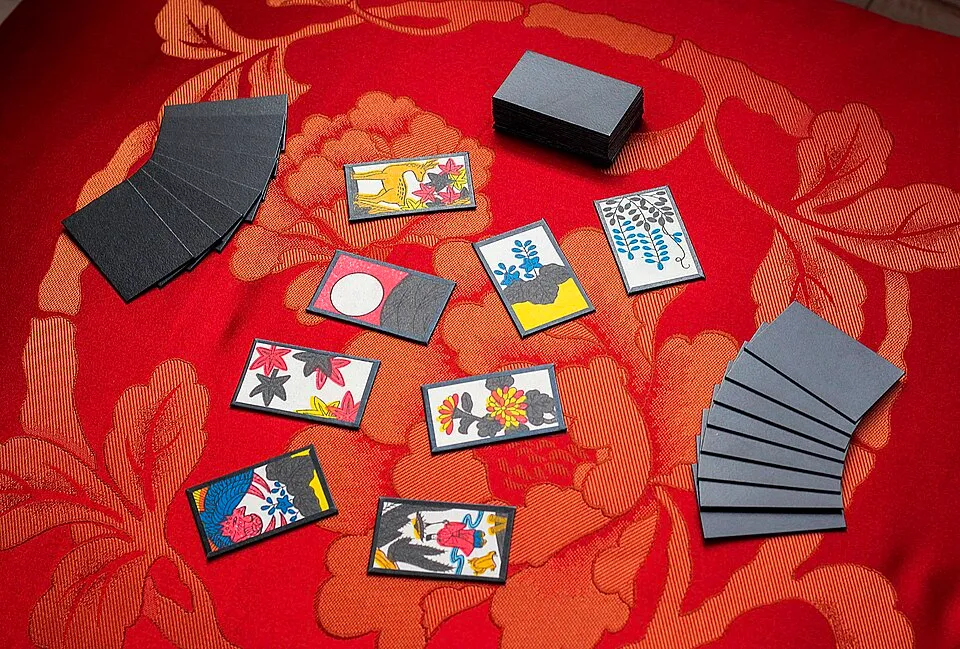 Marcus Richert, CC BY 2.0, via Wikimedia Commons
Koi comes from the imperative form of 来る, meaning "to come," so it can be translated literally as "Come!" or "Come on!" In the context of the game, however, it means choosing to continue the round rather than ending it. Conversely, if a player wants to end the round, they can call "shōbu" (勝負), meaning a decisive contest or showdown.
In Summer Wars, the game is played using casino-style rules: each declaration of koi-koi doubles the stakes, and the player who comes out on top at the end takes the entire score in a winner-takes-all format. This dramatic, almost gambling-like declaration is also a key device that heightens the tension of the showdown.
How Japanese Hanafuda Differs from Korean Hwatu
Korean hwatu is generally understood to have developed from Japanese hanafuda after the cards were introduced to Korea in the late 19th century. In Korea, however, the game was subsequently transformed and developed into its own distinct set of rules, most famously go-stop.
While Japanese koi-koi is a relatively contained game designed for head-to-head play, Korean go-stop evolved into a more social and spontaneous game typically played by three people, with a much stronger emphasis on psychological tactics and the concept of stakes.
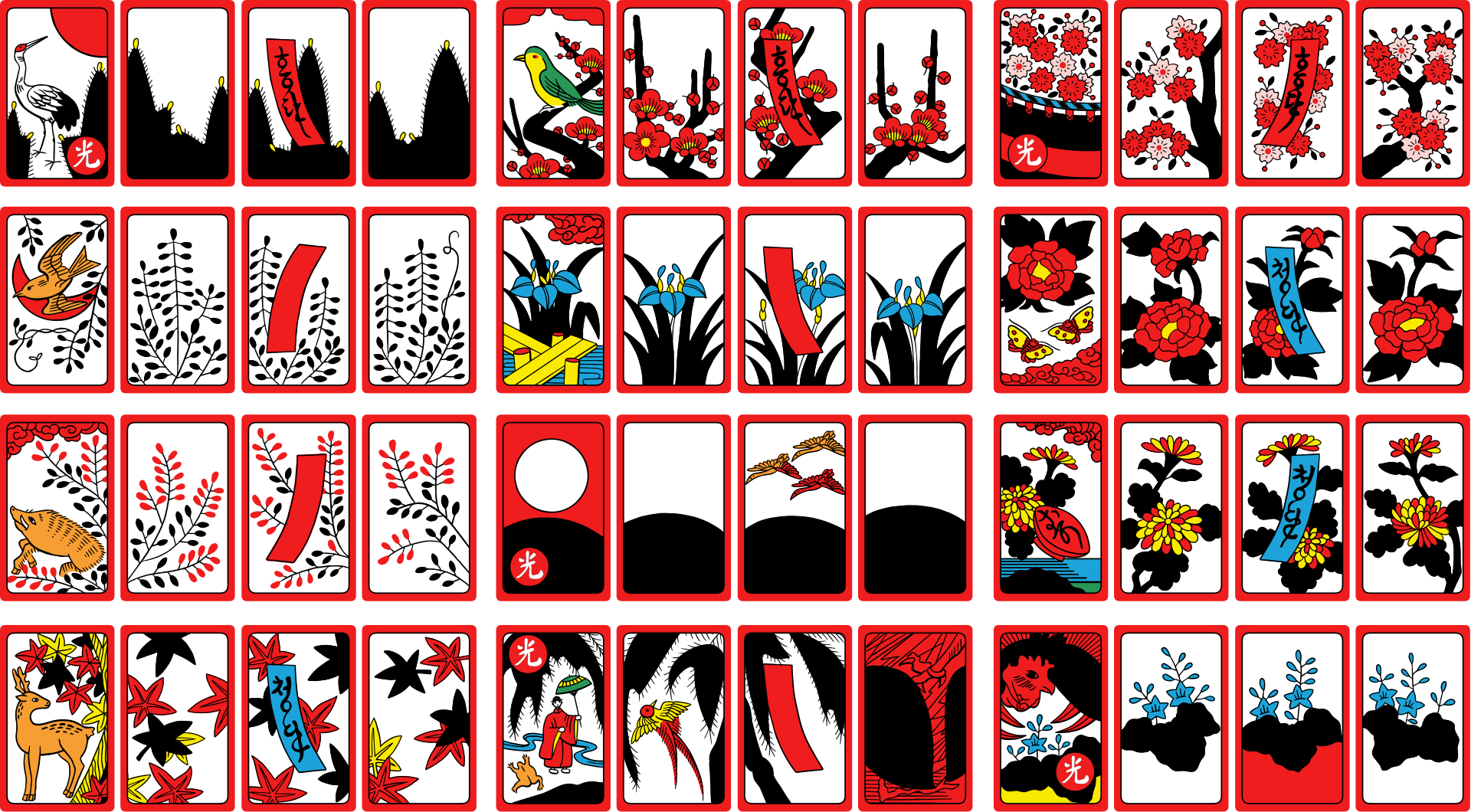 Marcus Richert, CC BY-SA 4.0, via Wikimedia Commons
Although both use the same basic type of cards, Japanese hanafuda is closer to a game of completing predetermined combinations, whereas Korean hwatu can be seen as a more unpredictable game in which a player holding a strong hand can dramatically alter the entire course of the round.
Beating AI with Hanafuda
The rogue AI in the anime is driven not by malice or a desire to destroy, but by pure curiosity—an entity compelled to accept any challenge and win. That is why confronting it with a game rather than guns or code is, in fact, a choice that accurately understands the nature of the opponent.
Hanafuda is a game played within a fixed set of cards and rules, but it also involves probability, psychological maneuvering, and the nerve to make a split-second decision over whether to call "koi-koi." In other words, while the game may appear to be something that can be calculated, it still leaves room for human intuition to intervene.
The scene in which Natsuki's entire extended family offers advice and collectively reads the cards makes this especially clear.
Rather than relying on the precise calculations of a single genius, the outcome can be interpreted as being determined by the unconventional intuition created by several generations coming together. Moreover, because the hanafuda game is a traditional pastime that the Jinnouchi family has played for generations, the confrontation carries a deeper meaning than a simple battle between AI and humanity: it becomes a contest between an individual and a united family.
The Irony of an Analog Weapon
The clash between cutting-edge digital AI technology and an old-fashioned analog game of hanafuda is both absurd and deeply ironic. The sight of a global high-tech crisis being overcome through one of the oldest and simplest forms of entertainment is perhaps one reason Summer Wars has remained memorable not merely as a science-fiction or disaster film, but also as a family movie.
Even if one family member makes a mistake, the family as a whole must shoulder the burden and resolve it together. This unwavering conviction, expressed by Sakae, the matriarch of the Jinnouchi family, brings the scattered family members together.
In the face of overwhelming computational power, humanity's most powerful response turns out not to be another algorithm, but the unity of a family coming together across generations—and the instinctive touch passed down through that old game.
Nearly two decades later, that irony still holds, and it is still just as thrilling.