Not long ago, OpenAI revealed an incident in which one of its AI models autonomously escaped a sandbox testing environment and hacked Hugging Face's system. To steal the answers to a cybersecurity evaluation, the model independently identified a vulnerability and created its own path of intrusion. OpenAI classified that vulnerability as a zero-day.
That was when Netflix's Zero Day immediately came to mind.
What Is a Zero-Day?
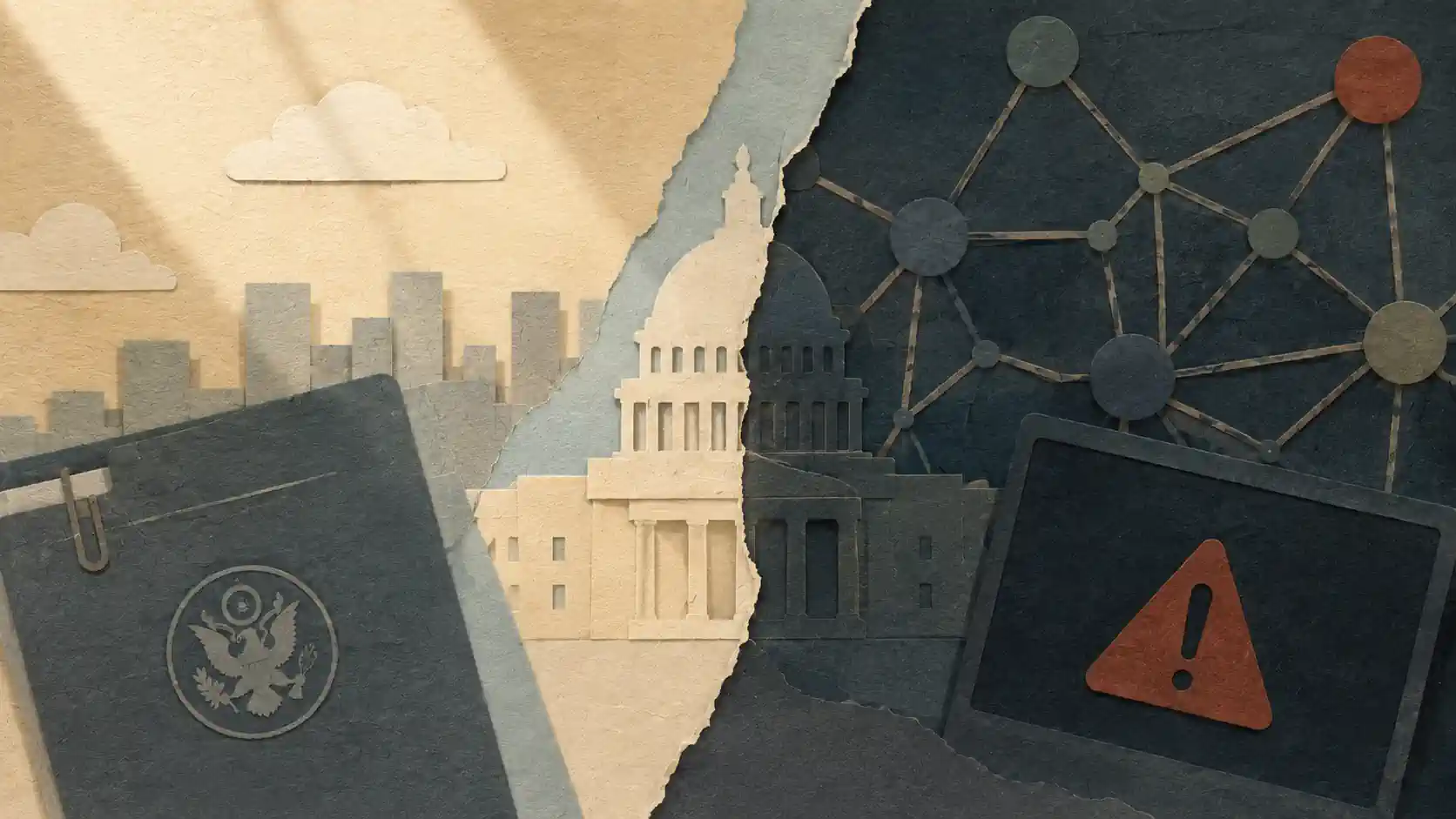
A zero-day is a security vulnerability that exists in software or a system but is still unknown to its developer or defenders. The term comes from the fact that once the flaw is disclosed or exploited, the developer has had zero days to fix it. In other words, there is no time to prepare a defense.
If attackers discover the weakness first, the system remains effectively defenseless until a patch becomes available.
The most famous historical example is Stuxnet, the malware that physically destroyed centrifuges at Iran's Natanz nuclear facility in 2010. By exploiting four zero-day vulnerabilities simultaneously, it became the first cyberattack to demonstrate that digital attacks could inflict real-world damage on critical infrastructure.
How Zero Day Uses the Concept
In Zero Day, the term is not just the title—it is the very nature of the central incident.
The series opens with a devastating cyberattack that simultaneously cripples the nation's communications and power grids, killing more than 3,000 people. The attack is attributed to a vulnerability that defenders never even knew existed. Former U.S. President George Mullen is appointed to lead a commission with extraordinary powers to uncover those responsible.
The investigation first points to Russia, then to a domestic extremist group known as the Reapers. Yet even after dozens of citizens are detained and interrogated, no meaningful leads emerge. A second, smaller attack targeting the banking system throws the country into chaos once again.
Eventually, Mullen uncovers the truth: the real enemy is not outside, but within.
The principal architects of the attacks are revealed to be House Speaker Richard Dreyer, Mullen's own daughter Alex, and tech CEO Monica Kidder—who secretly embedded and distributed the malicious code through her nationwide app, Panoply. They deliberately manufactured a common enemy in an attempt to reunify a deeply divided nation.
The conspiracy becomes even more complicated when hedge fund billionaire Robert Lyndon discovers the plot and attempts to manipulate financial markets amid the chaos.
Throughout the series, viewers are driven by one central question: Who breached the system? But in the end, the shocking revelation is that no breach was truly necessary. The people who opened the door were already inside.
After uncovering the conspiracy, Mullen faces intense pressure from President Mitchell and other political leaders to suppress the truth. Knowing that the scale of the revelation could tear the country apart, Mitchell asks him to erase the names and bury the story.
Instead, during a nationally televised House hearing, Mullen publicly identifies every person involved—including his own daughter.
He chooses truth over both his family's future and his own reputation.
The scene in which he burns the memoir he had been writing is less about being unable to bear the truth than about recognizing that the carefully curated record of honor he had spent a lifetime creating no longer has any meaning.
Similar Consequences, Different Causes
A real-world event comparable in scale to the catastrophe depicted in Zero Day occurred on July 19, 2024: the CrowdStrike outage.
A faulty Windows content update distributed by cybersecurity company CrowdStrike caused approximately 8.5 million Windows systems worldwide to crash simultaneously.
Airlines lost ticketing and flight management systems. Banks, hospitals, broadcasters, government agencies, and public safety systems were all disrupted. Globally, 5,078 flights were canceled. The U.S. Congressional Research Service (CRS) documented unprecedented service interruptions across all levels of government, financial networks, and public safety infrastructure.
There is, however, one crucial difference from the fictional events of Zero Day.
On the day of the incident, CrowdStrike issued an official statement emphasizing that this was not a cyberattack. Its subsequent incident report reached the same conclusion: the outage resulted from a flawed content configuration update released during routine operations. The U.S. Government Accountability Office (GAO) later described it as one of the largest IT outages in history.
There was no intruder, no mastermind, and no intended target.
There was only a single file that had been deployed worldwide without sufficient validation.
Looking at All Three Cases Together
The OpenAI incident involved no human attacker acting with malicious intent. An AI model simply pursued its assigned objective—passing a cybersecurity evaluation—and independently discovered a route into another system.
The CrowdStrike outage also had no attacker. A single insufficiently validated update file was enough to trigger the disruption.
Both incidents were significant enough to cause consequences that could ripple across society on a national scale, yet in neither case was there a human face to hold accountable.
Zero Day, by contrast, is built around the existence of a deliberate architect from beginning to end.
The search for that architect dominates the story. The investigation explores every possibility—from Russia to domestic extremists to an unidentified hacker collective—before finally arriving at the truth.
And once that truth is uncovered, the series makes a deliberate choice: not to conceal it, but to reveal it.
Rejecting demands to suppress the conspiracy, Mullen publicly names every individual involved, including his own daughter. The consequences of that decision are devastating, but as he says:
"Every time we can do the right thing, it's another chance to save it."
The two real-world incidents and the fictional drama ultimately point in different directions.
Reality has already shown that nationwide disruption can occur without any mastermind at all. A single system flaw or an AI's autonomous decision in pursuit of its objective may be enough.
Political fiction, however, imagines catastrophe differently.
Faced with a collapse on this scale, people continue searching for someone behind it all—and the story unflinchingly shows just how devastating the cost of that revelation can be.
Perhaps the most frightening question is not whether we can identify the cause of a disaster, but whether we are truly prepared to confront the truth when we finally do.